
Can You Paint the Same Day You Pressure Wash? The Honest Truth
Let me tell you about a guy named Dave.
Dave was a Saturday warrior. He had a beautiful two-story colonial, a free weekend, and five gallons of expensive “Slate Grey” exterior paint. He was excited. He woke up early, looked at his siding, and thought, “Eh, looks clean enough. Maybe a little dust, but nothing major.”
He skipped the wash. He went straight to priming and painting.
By Sunday evening, the house looked incredible. Dave felt like a hero.
Six months later? Not so much.
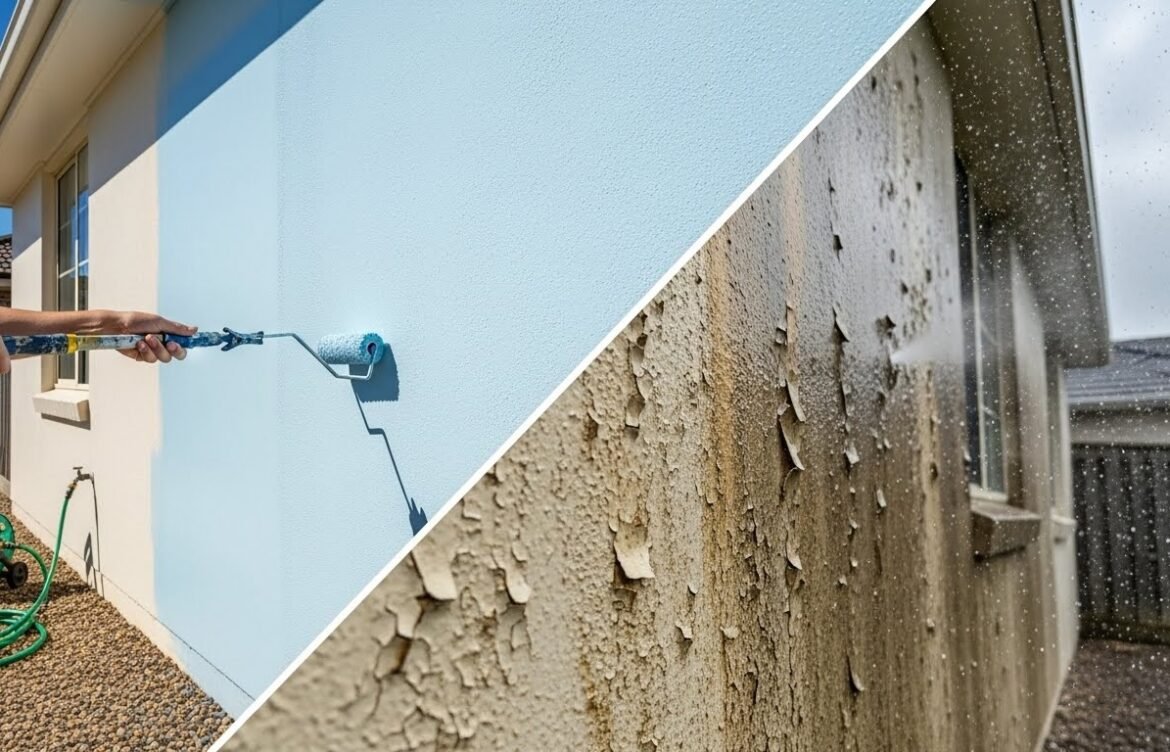
I got the call when the paint started bubbling. Not just peeling—literally bubbling up like a blister. When I went out to take a look, I popped one of those blisters, and on the back of the paint chip was a fine layer of gray dust.
That “clean enough” siding was actually covered in chalky oxidation. Dave had essentially painted over a layer of loose powder. The paint never even touched the house; it just bonded to the dirt.
It was a heartbreaking conversation because the only fix was to strip it all down and start over.
I share this not to scare you, but because I see it happen all the time. There is this massive temptation to rush the prep work because prep is boring. Painting is the fun part where you see the transformation. Washing? That’s just a chore.
But at precisionpaintexperts, we know that 80% of a lasting paint job happens before you ever crack open a can of paint. The big question I hear constantly is: “Do I really need to wait days after washing to paint?”
The answer might surprise you. Sometimes, you don’t. But you have to know what you’re doing.
Why “Clean” Isn’t Actually Clean
Here’s the thing about exterior siding. It lies to you.
You might stand back at the curb and think your house looks pristine. But if you walk up and run your dark t-shirt against the siding, you’re going to see a streak of white powder. That’s oxidation. It happens to vinyl, aluminum, and even painted wood over time.
Then you’ve got the invisible stuff. Mold spores that haven’t bloomed yet. Pollen that’s stuck in the wood grain. Spiderwebs tucked under the lap siding.
If you paint over any of this, you are building your house on a foundation of sand. The paint will stick to the contaminant, not the substrate. And when that contaminant loosens? Your paint falls off.
The “Same Day” Debate
So, can you wash in the morning and paint in the afternoon?
Conventionally, the “safe” answer is no. You’ll hear people say you need to wait 24 to 48 hours for the siding to dry completely. And if you are soaking porous wood siding with a high-pressure blaster, they are absolutely right. Wood acts like a sponge. If you paint over wet wood, you trap moisture inside, which leads to rot and peeling.
However.
If you are using the right technique—and you live in a climate that actually helps you out—it is possible to prep and start painting in the same timeline. But it requires a very specific approach.
The Secret is “Soft Washing,” Not Blasting
Most homeowners grab a pressure washer and crank it up to 3,000 PSI, thinking they need to blast the dirt off.
Please, don’t do this.
High pressure forces water deep into the siding, behind the trim, and sometimes even into your wall cavity. It can gouge wood and shatter vinyl. Plus, it saturates the surface so deeply that, yes, you would need to wait days for it to dry.
The professional method we use—and what you should do—is Soft Washing.
This relies on chemistry, not brute force. You use a specialized cleaning solution (usually a mix of water, a surfactant/soap, and a mildewcide like bleach) to kill the mold and lift the dirt. You let the soap do the work for 10 minutes, and then you rinse it off with volume, not pressure. Think of it like a heavy rain, not a laser beam.
Because you aren’t driving water deep into the material, the surface dries much, much faster.
Expert Insights: How to Judge Readiness
If you’re trying to optimize your weekend, here is how you can tell if you’re ready to paint.
1. The Moisture Meter is Your Friend
You can buy a cheap moisture meter at any hardware store. For wood surfaces, you generally want the moisture content to be below 15% (ideally 12%) before you apply solvent or oil-based products. Latex is a little more forgiving, but 15% is a good safety line.
2. Follow the Sun
This is a logistical trick we use on job sites. Start washing on the side of the house that gets the morning sun. By the time you finish washing the shaded side, the sunny side has been baking for hours.
If you’re in a warm climate—like when we handle exterior painting projects in Florida—the sun is intense enough to dry soft-washed hardie board or stucco in as little as 2-3 hours.
3. The “Chalk” Test
Remember Dave? Don’t be Dave. Before you declare the washing “done,” do the swipe test again.
- Swipe your hand: Is it clean? Good.
- Is it still chalky? You need to wash it again, maybe with a mild scrubbing brush this time.
- Is it slimy? That’s soap residue. Rinse it again.
If you are dealing with particularly stubborn grime or old, failing paint, you might need more than just a wash. Sometimes, pressure washing reveals that the wood itself is damaged. If you see rot or soft spots after cleaning, you need to stop and address that. We have a guide on drywall and surface repair that touches on how vital a solid surface is.
Practical Application: Your Game Plan
If you are dead set on a quick turnaround, here is how you structure your day for success.
7:00 AM: Prep the perimeter. Cover your plants (bleach kills hydrangeas). Tape off electrical outlets. 8:00 AM: Start Soft Washing. Work from the bottom up to prevent streaking, then rinse from the top down. 11:00 AM: Finished washing. Now, wait. Go have lunch. Let the wind and sun do their job. 1:00 PM: Check for dryness. Look for dark spots on wood (sign of moisture) or water trapped in the weep holes of vinyl siding. 2:00 PM: If dry, start your masking and taping. 3:00 PM: Start cutting in or spraying, focusing on the sides that have been dry the longest.
A Critical Warning: If you live in a high-humidity area or it’s an overcast, cool day, do not force it. If the siding feels cool or clammy to the touch, wait until tomorrow. It’s not worth risking the entire paint job to save 12 hours.
Also, consider the lifespan of your paint. If you rush this step, you cut the life of your paint job in half. We often discuss how long exterior paint should last when done correctly—usually 7-10 years. If you trap moisture, you might get 2 years.
FAQ: Quick Answers to Common Worries
Q: Can I use dish soap in my pressure washer? A: You can, but it won’t kill mold. It just moves dirt around. You really need a mildewcide (like a diluted bleach solution) to actually sterilize the surface so mold doesn’t grow back under your new paint.
Q: What if I have peeling paint? A: Pressure washing might blow loose paint chips all over your yard. That’s actually a good thing—it saves you scraping time. Just make sure you lay down drop cloths to catch the chips, especially if your home was built before 1978 (lead paint rules apply!).
Q: Do I need to pressure wash if the house looks clean? A: Yes. Always yes. Even “clean” houses have that invisible layer of atmospheric dust and oils. Paint needs a chemical-free surface to bond to. Think of it like pressure washing a driveway before sealing it—it’s all about adhesion.
Conclusion
Prep work isn’t sexy. I know that. Nobody invites the neighbors over to watch them spray water on siding.
But the difference between a professional paint job and a “Dave disaster” is almost entirely in the prep. You can buy the most expensive paint in the world, but if you put it on a dirty or wet surface, it will fail.
If you’re looking at your house and thinking, “I really don’t want to mess this up,” or if you just don’t have the equipment to do a proper soft wash, give us a shout.
At precisionpaintexperts, we have the industrial gear and the experience to get your home perfectly prepped and painted, often faster than you could do it yourself. We treat your home like our own—meaning we never cut corners on the cleaning.
Ready to get started? Contact us for a free quote and let’s make your house the envy of the block (without the bubbles).