
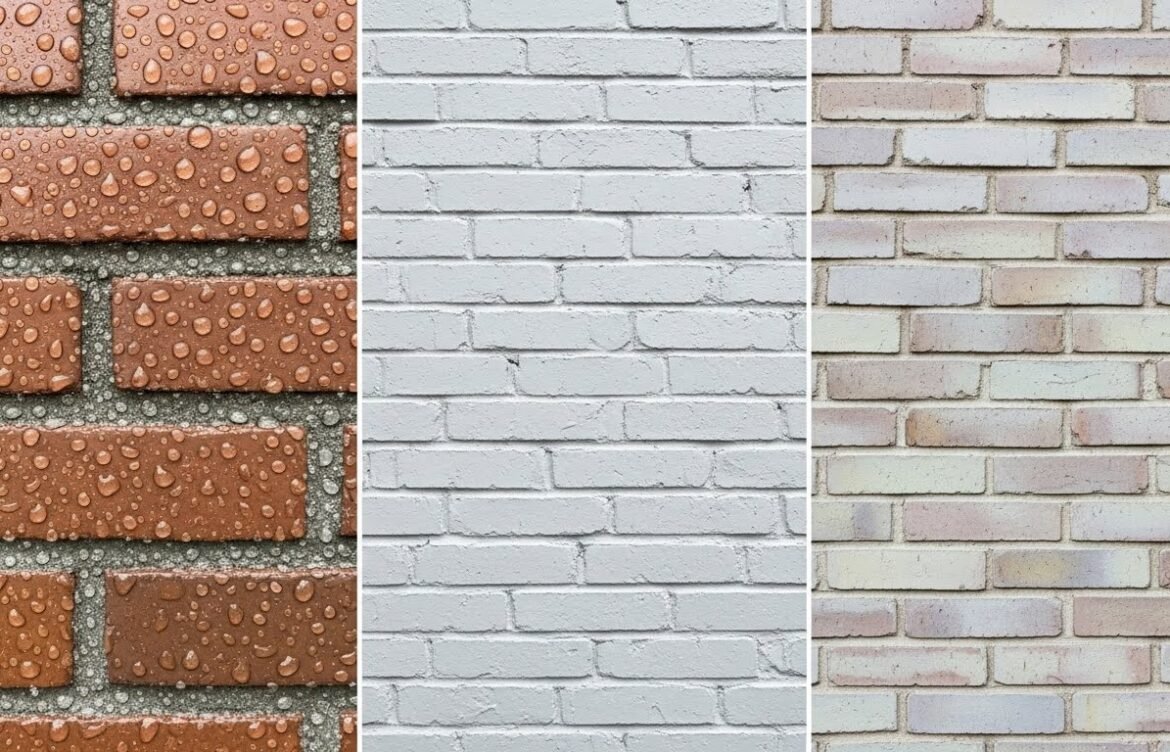
Waterproofing Brick Sealers vs. Paint vs. Limewash
Here is a fact that surprises most homeowners: Brick is basically a hard sponge.
We tend to think of masonry as this indestructible shield. And sure, it’s strong. It can hold up a roof. But if you’ve ever sprayed a garden hose on a bare brick wall, you’ve seen what happens. The water doesn’t bead up and roll off; the brick gets dark. It drinks the water.
Usually, the sun comes out, the brick dries, and life goes on.
But what happens when it rains for three days straight? Or when that moisture freezes inside the brick face? Or when mold starts growing in the grout lines?
That’s when you start seeing problems. Maybe it’s “efflorescence” (that chalky white powder that looks like salt stains). Maybe it’s a musty smell in your living room. Or worst-case scenario, the face of the brick starts popping off (we call that spalling).
If you’re reading this, you’re probably thinking about adding a protective layer to your home. But the options are confusing. Do you seal it? Paint it? Limewash it?
At Precision Paint Experts, we see this debate play out every week. Each method has a totally different look and a different way of handling water.
Let’s break down the three main heavyweights in brick protection so you can figure out which one belongs on your house.
The Three Contenders: An Overview
Before we get into the nitty-gritty, let’s introduce the players.
- Clear Masonry Sealers: The “Invisible Shield.” You love the look of your brick, but you want it to stop drinking water.
- Exterior Paint (Elastomeric or Acrylic): The “Total Makeover.” You want to change the color entirely and create a uniform, waterproof barrier.
- Limewash & Mineral Stains: The “Old World” approach. You want a breathable finish that calcifies to the brick, giving it that vintage, patina look.
Option 1: Clear Masonry Sealers (Siloxanes)
If you live in a classic red brick colonial or a charming bungalow and the thought of painting over that history makes you shudder, this is your lane.
But be careful. Not all sealers are created equal. You might see cheap “acrylic sealers” at the hardware store that look like a shiny varnish. Avoid those. They form a film that can trap moisture inside the brick, causing it to rot from the inside out.
The industry standard—and what we use—is a Siloxane or Silane penetrant.
The Pros
- It’s Invisible: Once it dries, you can’t tell it’s there. Your house looks exactly the same, just protected.
- Hydrophobic Magic: This is the satisfying part. When it rains, water beads up and rolls right off the wall. It’s mesmerizing to watch.
- Fully Breathable: This is critical. Siloxanes penetrate the pores to stop liquid water from entering, but they allow water vapor to escape. Your house can still “breathe.”
The Cons
- Zero Aesthetic Change: If your brick is an ugly color, this won’t fix it. It just preserves the ugly.
- Re-application: These sealers don’t last forever. Depending on the exposure to UV rays and rain, you might need to re-apply every 5 to 7 years.
Best Use Case
You have beautiful brick that is in good condition, but you are noticing dampness or mildew, or you just want to extend the life of the mortar joints.
Option 2: Exterior Paint (Elastomeric or High-Build Acrylic)
This is the big trend right now. Everyone wants that “Modern Farmhouse” white brick look. Painting brick is the most dramatic change you can make to your curb appeal.
But from a waterproofing standpoint, paint acts very differently than a sealer. Paint is a film. It sits on top of the brick.
The Pros
- Total Transformation: You can take a dated, 1970s orange brick and turn it into a modern, crisp white or a moody charcoal.
- Heavy-Duty Barrier: High-quality exterior paints (especially Elastomeric ones) are thick. They can bridge hairline cracks in the mortar that a sealer might miss. It’s like wrapping your house in a rubber raincoat.
- Easy Cleaning: Painted brick is much easier to pressure wash and keep clean than raw, porous masonry.
The Cons
- The Breathability Risk: If you use the wrong paint (like a cheap latex), you risk trapping moisture. If water gets behind the paint (say, through a roof leak), it can’t get out. The pressure builds up and pushes the paint off the wall.
- Maintenance Commitment: Once you paint brick, you are married to painted brick. You can’t really go back. And eventually, paint will need to be recoated.
Best Use Case
You want to modernize the look of your home significantly and you want a solid barrier against the elements. Just make sure you hire pros who understand exterior painting on masonry specifically.
Option 3: Limewash & Mineral Stains
This is the hipster cousin of paint. Limewash has been used for centuries (think of those old buildings in Europe). It’s made from crushed limestone and water.
Mineral stains are similar—they soak into the brick and dye it, rather than coating it.
The Pros
- Chemical Bond: Limewash doesn’t just sit on top; it calcifies and becomes part of the stone. It will never peel or flake off.
- Naturally Antifungal: The high pH of lime means mold and moss hate it. It’s a natural sanitizer for your exterior.
- The “Patina” Look: It gives a soft, chalky, weathered appearance that looks established, not “plastic” like some paints.
The Cons
- It Weathers Away: Limewash is designed to slowly erode over time (decades). Some people love this evolving look; others hate that it isn’t permanent.
- Less “Waterproof”: While it protects the brick, it isn’t a waterproof barrier in the same way an elastomeric paint is. It sheds water, but it’s highly permeable.
- Limited Colors: You’re mostly working with whites, off-whites, and earthy tones.
Best Use Case
You own a historic home or you want that textured, “Old World” aesthetic. It’s less about maximizing waterproofing and more about healthy, breathable masonry.
Side-by-Side Comparison
Here is the cheat sheet if you’re trying to decide:
| Feature | Clear Siloxane Sealer | Exterior Paint | Limewash |
| Visual Change | None (Invisible) | 100% Color Change | Soft/Chalky/Textured |
| Waterproofing | Excellent (Beads water) | Excellent (Film barrier) | Good (Sheds water) |
| Breathability | High | Low to Medium | Very High |
| Maintenance | Re-seal every 5-7 years | Re-paint every 10-15 years | Touch up as needed |
| Reversibility | Yes (wears off) | No (Permanent) | Difficult (can be washed off early) |
Expert Recommendations
So, which one should you choose? Here is how we usually guide our clients:
Choose the Sealer if:
You love your brick color. You just want to stop the water intrusion, protect the mortar from crumbling, and keep the exterior cleaner for longer. We often recommend this for clients after a thorough cleaning.
Choose Paint if:
You hate your brick color. If the color is the problem, sealer won’t make you happy. Paint gives you a fresh start. Just ensure you use a masonry-compatible primer and topcoat. (Check out our guide on exterior paint lifespan to see what to expect).
Choose Limewash if:
You want character. If you want your home to look like an Italian villa or an English cottage, limewash is the only way to get that texture. It’s a specific vibe for a specific homeowner.
The Decision Framework: Ask Yourself This
Still stuck? Ask yourself these three questions:
- “Is my brick crumbling?”If the brick face is spalling (flaking off), you have serious moisture issues. Do not paint over this. Paint will trap the moisture and make the brick explode faster. You need to address the water source and likely use a breathable sealer or replace the bricks first.
- “Am I doing this for looks or for protection?”If it’s 90% protection, go with a Siloxane sealer. It’s the most chemically sound way to protect masonry without altering its physics. If it’s 50/50 looks and protection, paint is a valid option, provided the prep is done right.
- “What is my maintenance tolerance?”Paint requires the most prep work down the road when it’s time to repaint. Sealer is easy—clean it and spray it again. Limewash is the most “laissez-faire”—you can just let it fade.
FAQ
Can I seal painted brick?
No. The sealer needs to penetrate the raw masonry pores. If there is paint there, the sealer will just sit on top and do nothing.
Does sealing brick change the color?
Some solvent-based sealers can darken the brick slightly (giving it a “wet look”). Water-based siloxanes usually dry invisible. We always do a test spot first to be sure.
How much does it cost?
Generally, sealing is the cheapest option because the labor is faster (no cutting in around windows with a brush). Painting is the most expensive due to the prep, priming, and multiple coats.
Conclusion & Next Steps
Water is the enemy of your home. Whether you decide to seal it invisibly or wrap it in a fresh coat of color, doing something is better than letting your masonry soak up every rainstorm.
If you’re looking at your exterior walls and seeing moss, dark spots, or efflorescence, don’t wait until the mortar starts falling out.
At Precision Paint Experts, we handle all three of these applications. We can come out, test your brick’s porosity, and give you an honest recommendation on whether you need a sealer, a paint job, or just a good cleaning.
Ready to protect your investment? Get a free quote here, and let’s keep your home dry and looking good.