
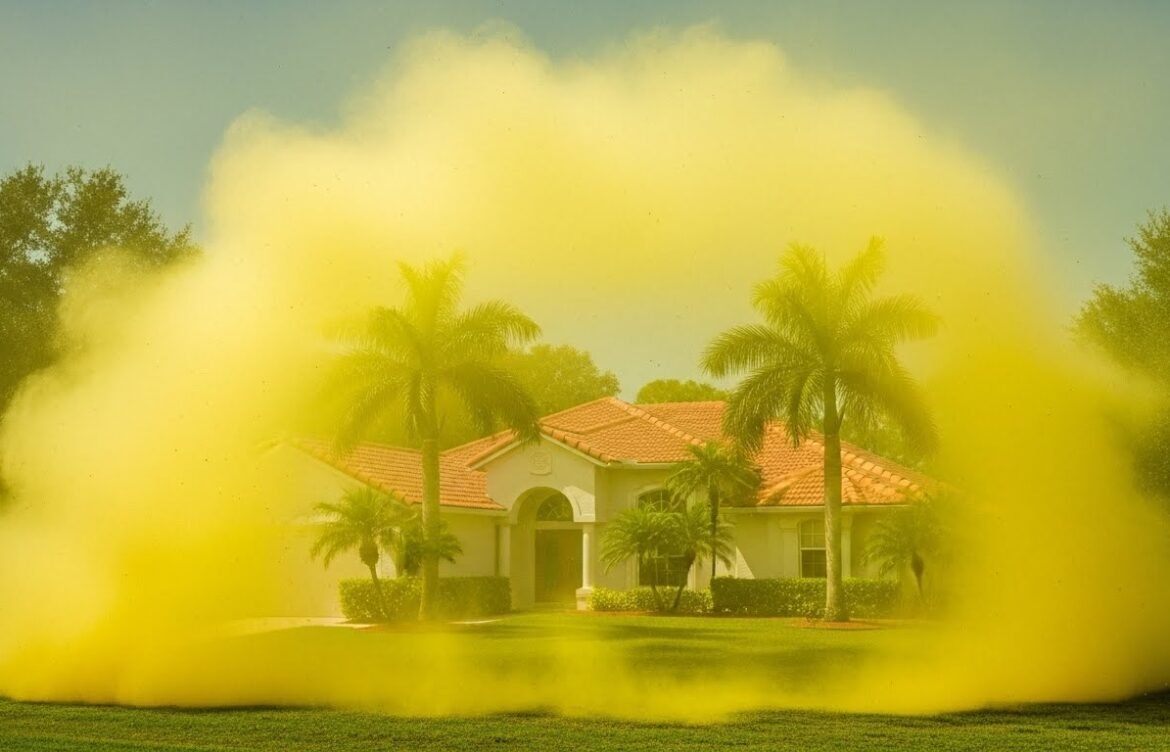
That Yellow Dust Rescuing Your Florida Home from Pollen Season
If you live in Florida, you know the “Yellow Season.” It’s that time of year when you wake up, look outside, and realize your car, your driveway, and—most frustratingly—your entire house looks like it’s been dusted with a giant bag of Cheeto powder.
Pollen in Florida isn’t just an allergy trigger; it’s a stubborn, sticky intruder that clings to your exterior paint. If you leave it there too long, the intense Florida sun can actually bake those organic proteins into the finish, leading to permanent staining or providing a “food source” for mold and mildew. Honestly, it’s enough to make any homeowner want to hide under the covers until June.
But here’s the thing: you don’t need to let the oak and pine trees win. At precisionpaintexperts, we see the toll that seasonal buildup takes on exterior paint lifespan in Florida. If you’re tired of the yellow haze and want to restore that crisp look your home used to have, you can always get a free quote from our team. But if you’re ready to tackle it yourself this weekend, let’s walk through the right way to do it without damaging your paint.
What You Need Before You Start
Cleaning pollen isn’t about brute force; it’s about breaking down the “sticky” factor. Pollen has a microscopic hook-like structure that helps it grab onto surfaces. If you just blast it with high pressure, you might actually drive it deeper into the pores of the paint.
The Toolkit
- Garden Hose with a High-Pressure Nozzle: (Note: We are avoiding heavy-duty power washers for this!)
- A “Soft Wash” Solution: A mix of water and a mild, biodegradable detergent (like Simple Green or a specialized house wash).
- Long-Handled Soft Bristle Brush: Think of the kind used for washing RVs or large trucks.
- Pump Sprayer: To apply your cleaning solution evenly.
- Microfiber Cloths: For stubborn spots on trim or window sills.
Step-by-Step Instructions
1. The Pre-Rinse (The “Cool Down”)
Before you apply any soap, give the entire wall a thorough rinse with plain water. This does two things: it removes the loose dust so you aren’t just moving mud around, and it cools the siding down so your cleaning solution doesn’t dry instantly in the sun.
Warning: Never clean your siding while it’s hot to the touch. In Florida, this usually means working in the early morning or late afternoon.
2. Apply Your “Soft Wash” Solution
Fill your pump sprayer with your cleaning mix. Start from the bottom of the wall and work your way up. This sounds counter-intuitive, but applying soap from the bottom prevents “clean streaks” from running down dry, dirty paint.
Tip: Let the solution sit (dwell) for about 5 to 10 minutes. You want the soap to break the bond between the pollen and the paint, but you must rinse it before it dries.
3. Agitate the Stubborn Spots
For areas where the pollen is thick—like under the eaves or around trim and moldings—use your soft-bristle brush. You don’t need to scrub like you’re sanding wood; a gentle circular motion is usually enough to lift the stain once the soap has done its work.
4. The Final Rinse (The Top-Down Method)
Now, switch to your hose and rinse from the top down. You want all that yellow slurry to flow off the house and into the grass. Keep rinsing until you don’t see any more bubbles or yellow tint in the runoff.
5. Inspect and Spot Clean
Once the wall starts to dry, walk around and look for “ghosting”—those faint yellow outlines that sometimes stay behind. Use a microfiber cloth and a bit of undiluted cleaning solution for these small areas.
Visual Descriptions
[IMAGE: A close-up of a white stucco wall. One half is covered in a thick, dull yellow coating of pollen. The other half is being sprayed with a wide-fan water nozzle, revealing a bright, clean white finish underneath.] This illustrates the dramatic difference a proper rinse can make before the sun “sets” the stain.
[IMAGE: A homeowner using a long-handled brush with soft blue bristles to gently scrub the area where the siding meets the soffit.] Note the relaxed grip—this is about agitation, not abrasion.
Troubleshooting Common Issues
- The Yellow Won’t Budge: This usually means the pollen has already started to mold. You might need to add a very small amount of bleach (1 part bleach to 10 parts water) to your cleaning solution to kill the biological growth.
- Streaking After Cleaning: This happens when the soap dries on the wall. If this occurs, re-wet the area, apply a fresh (weaker) soap solution, and rinse immediately.
- Paint is Flaking: If you see paint peeling as you clean, stop! This is a sign that your paint film is failing. Cleaning a failing surface will only make the damage worse. It might be time for a professional assessment.
Expert Tips for Florida Homes
I’ve lived through enough Florida springs to know that the “one and done” approach rarely works. Here is a pro-level insight: Timing is everything. If you clean your house at the very first sign of yellow, you’ll probably have to do it again two weeks later. Wait until the “peak” of the oak pollen drop (usually late March or early April in North Central Florida) to do your deep clean.
Also, consider your paint’s sheen. Flat paint is like a magnet for pollen because it’s so porous. If you’re planning on residential painting soon, I always recommend a Satin or Semi-Gloss finish for the exterior. The smoother the surface, the harder it is for pollen to “hook” on, and the easier it is for the rain to wash it away for you.
Summary & Next Steps
Pollen is an inevitable part of living in the Sunshine State, but it doesn’t have to ruin your home’s finish. By using a gentle soft-wash approach instead of high-pressure blasting, you can keep your home looking fresh without risking damage to your stucco or wood siding.
Recap Checklist:
- Rinse the wall to cool it down.
- Apply a mild detergent from the bottom up.
- Agitate the heavy spots with a soft brush.
- Rinse thoroughly from the top down.
If you find that the yellow stains are just masking deeper issues like cracks or chalking paint, don’t ignore it. Whether you need help with Gainesville FL pressure washing or a total color refresh, precisionpaintexperts is here to help.