
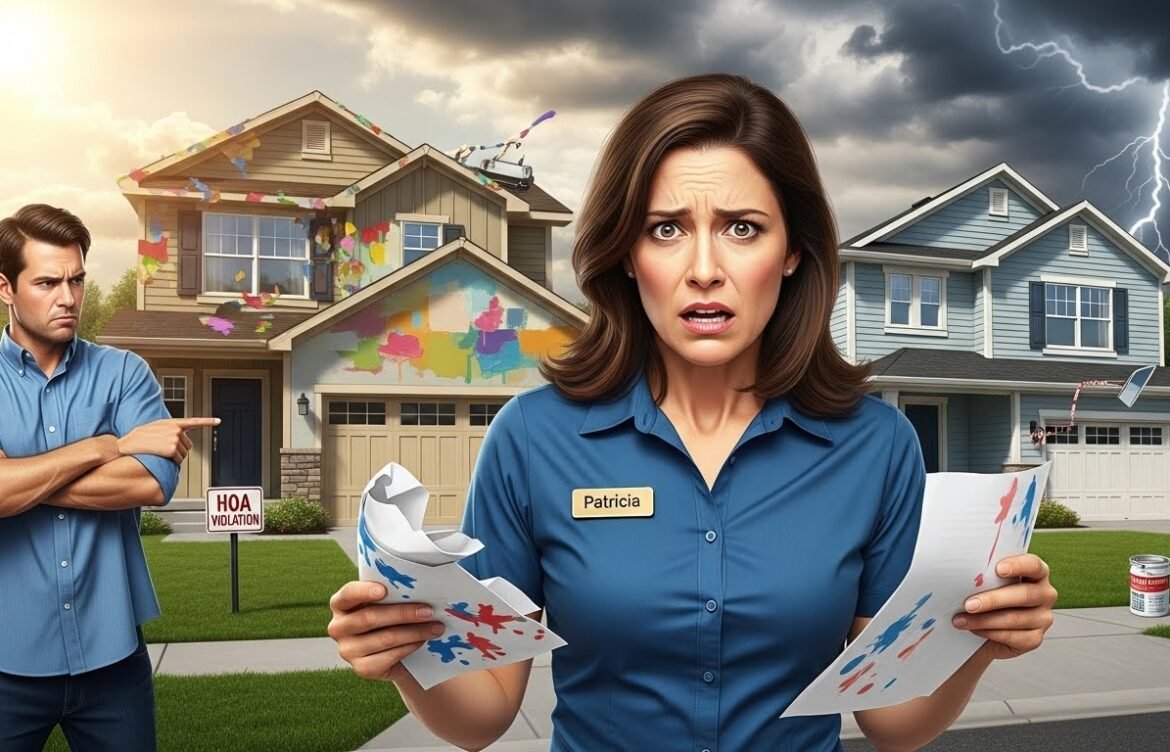
Why HOAs Need Licensed Painters: A Property Manager’s Survival Guide
Let me tell you a quick story about a woman named Sarah.
Sarah was the newly elected president of her HOA board. She was eager, organized, and—like all of us—wanted to save the community some money. The neighborhood fence line needed restaining. It was a massive job, spanning about half a mile of cedar planking.
She got three bids. Two were from established companies, coming in around $15,000. The third was from a “guy with a truck” named Mike. Mike quoted $8,500.
You can guess what happened. The board voted for Mike.
Three days in, Mike’s ladder slipped on wet grass. He wasn’t wearing a harness. He fell, broke his ankle, and the ladder crashed through a homeowner’s sunroom window, shattering a $2,000 pane of glass.
Then came the silence. Mike didn’t have Workers’ Compensation insurance. He didn’t have General Liability. Guess who was on the hook for Mike’s medical bills and the homeowner’s window? The HOA.
The $6,500 they “saved” turned into a $40,000 legal and medical nightmare.
I share this not to scare you, but because I see it happen all the time. When you are managing property—whether you’re a professional property manager or a volunteer board member—the stakes are different. You aren’t just painting a bedroom; you’re managing community assets and community liability.
Let’s talk about why “Licensed and Insured” isn’t just a marketing slogan—it’s the only thing standing between your community and a financial disaster.
The “Paperwork” That Actually Matters
We tend to glaze over when people talk about insurance and licenses. It sounds like bureaucratic fluff. But in the painting world, these are your shields.
When you hire a team like Precision Paint Experts, you aren’t just paying for the paint on the walls. You are paying for the transfer of risk.
1. General Liability: The “Oops” Insurance
This is what saves you when property gets damaged.
- The Scenario: A painter drops a 5-gallon bucket of exterior semi-gloss on a resident’s pristine pavers. Or overspray drifts onto a parked Mercedes.
- Without Insurance: The resident sues the HOA. The board scrambles. Neighbors get angry.
- With Insurance: The painting company’s policy covers the cleanup or replacement. The HOA board sleeps soundly.
2. Workers’ Compensation: The Big One
This is the one that destroys businesses.
- The Scenario: A worker gets hurt on your property.
- The Reality: If that worker is an “independent contractor” without his own insurance, the law often views you (the hiring entity) as his employer. That means you are responsible for his ambulance ride, his surgery, and his lost wages.
- The Solution: A reputable company carries Workers’ Comp on every single employee. If an accident happens, it’s a tragedy, but it’s not your liability.
3. The License: Proof of Competence
A license isn’t just a tax receipt. In many states, it proves the contractor understands safety codes, chemical handling, and local regulations. It separates the professionals from the hobbyists.
The HOA Ecosystem: It’s Not Just About Paint
Here is something I’ve learned after years of working with property managers: The painting is actually the easy part. The hard part is the people.
When we tackle a commercial painting project or a large residential community, we aren’t just dealing with one client. We are dealing with 50, 100, or 200 homeowners.
Each of them has an opinion. Each of them has a schedule. And each of them wants to know why a strange truck is parked in front of their driveway.
Communication is Key
A “Chuck in a Truck” painter doesn’t have a communication strategy. He just shows up.
A professional team understands that an HOA project requires logistics.
- Notification: We need to let residents know when we’ll be there.
- Respect: We don’t play loud music. We don’t leave cigarette butts in the flower beds.
- Speed: We bring a crew large enough to get in and get out. Dragging a project on for months is the quickest way to get the HOA board fired.
We recently worked on a project where we had to coordinate exterior painting for multiple townhouse units. The key wasn’t just the brushwork; it was the schedule we emailed out beforehand so residents could move their patio furniture and unlock their gates.
Expert Insights: Why Cheap Paint is Expensive
Let’s be honest about budgets. HOAs are tight. You have reserve studies to worry about. You don’t want to raise dues.
But buying cheap materials for an exterior project is the most expensive thing you can do.
Here’s the thing: Labor is 80% of the cost of a paint job. The paint itself is maybe 20%.
If you use a cheap, contractor-grade paint that fades in 3 years, you have to pay that 80% labor cost again in 3 years. If you use a premium, high-durability coating (like the ones we discuss in our guide on exterior paint lifespan in Florida), you might not have to paint again for 7 to 10 years.
The Math:
- Cheap Job: $20k every 4 years = $5,000/year cost.
- Quality Job: $28k every 8 years = $3,500/year cost.
The “expensive” bid is actually cheaper in the long run.
The Consistency Problem
Another issue we see with unlicensed or inexperienced painters is a lack of consistency.
In an HOA, uniformity is god. Unit A needs to look exactly like Unit B. If a painter doesn’t keep strict records of the color formulas, sheens, and application methods, you end up with a patchwork quilt of a neighborhood.
When we do a job, we document everything. If you call us back in two years for drywall repair and patching in the clubhouse, we know exactly what color is on those walls. No guessing.
Action Plan: How to Vet Your Painter
Okay, so you’re on the board, or you’re the property manager. You have a stack of bids. How do you filter out the “Mikes” (from our story earlier) and find the pros?
Here is your cheat sheet:
- Ask for the COI (Certificate of Insurance): Don’t just take their word for it. Ask to have the certificate emailed directly from their insurance agent to you. This prevents people from showing you an expired or photoshopped policy.
- Check the Exclusions: Some cheap policies have “height exclusions” (meaning they aren’t covered if they go above two stories). If you have three-story condos, that insurance is worthless.
- Ask About the Crew: Are these employees or day laborers picked up that morning? (At Precision Paint Experts, our teams are vetted and trained).
- Get a Detailed Scope: The quote should specify the brand of paint, the number of coats, and the prep work. “Paint building” is not a scope. “Pressure wash, caulk all cracks, apply one coat Loxon Primer and two coats SuperPaint” is a scope.
FAQ: Common HOA Questions
Q: Do we need to paint the whole community at once? A: Not necessarily. We often work with HOAs to create a “phased plan.” Maybe we do Building 1-5 this year and Building 6-10 next year. This helps with cash flow.
Q: How do you handle color changes? A: If the board wants to update the look, we can provide color consultation and apply large samples to the building so the community can vote. Never pick exterior colors from a tiny chip!
Q: What about rotten wood? A: We see this constantly. A good painter won’t just paint over rot. We identify it and can often coordinate the repairs before the paint goes on.
The Bottom Line
Being on an HOA board is a thankless job. You’re volunteering your time to protect your neighbors’ investments.
Don’t add “being sued” to your list of duties.
When you hire a licensed and insured contractor, you aren’t just buying a service. You’re buying peace of mind. You’re buying the assurance that the job will be done right, safely, and legally.
If your community is looking tired, or if you just want a second opinion on a project, reach out to us. We understand the unique pressures of property management.
You can get a free quote here, and let’s talk about how to make your community shine without the risk.