
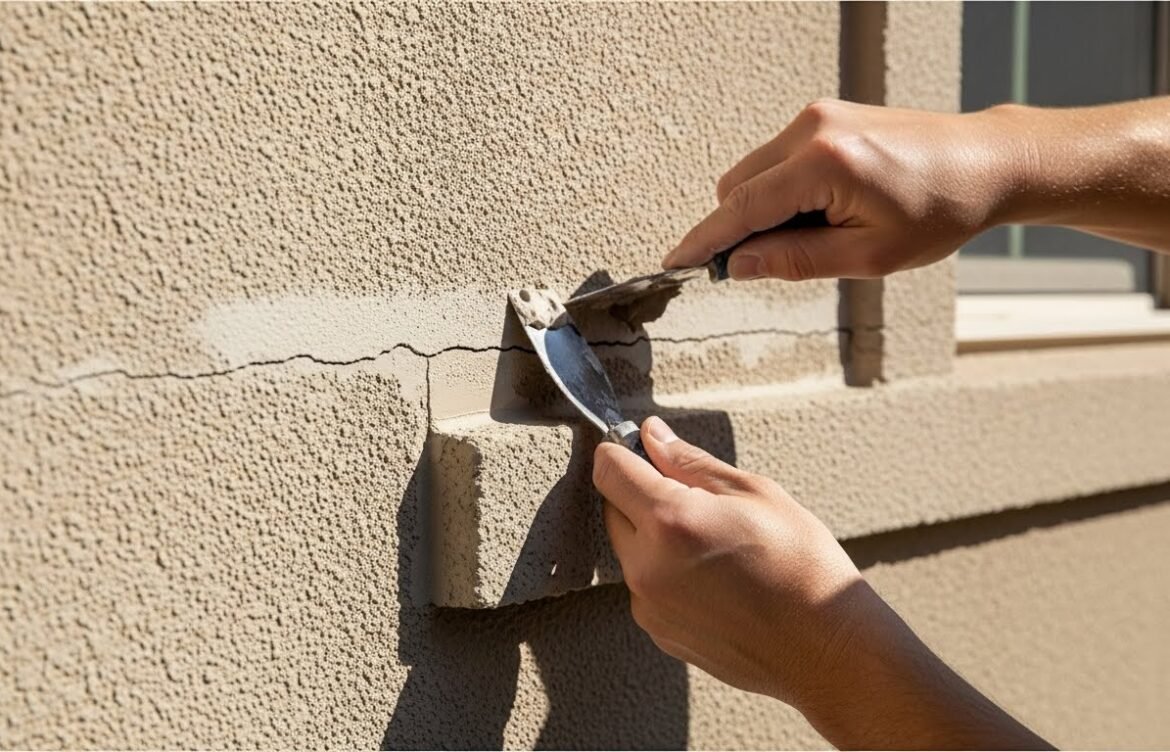
Dealing with the “Spiderweb” on Your Exterior Walls
You know that feeling when you’re watering the garden or pulling into the driveway, and you suddenly spot a hairline fracture snaking up your exterior wall? It’s a bit like finding the first grey hair in the mirror. You hope if you ignore it, it won’t multiply, but deep down, you know it’s just the beginning.
Stucco is a fantastic, durable material—especially here in the humidity—but it’s also rigid. When the ground shifts even a fraction, or the temperature swings from a swampy afternoon to a chilly night, the stucco has to give. And when it gives, it cracks.
Ignoring these isn’t just a “looks” thing. Those tiny cracks are basically invitations for moisture to get behind the finish, rot your sheathing, and turn a weekend touch-up into a massive restoration project. Honestly, we’ve seen small cracks turn into full-blown “chunk-falling-off-the-wall” disasters because they weren’t caught in time.
If you’re already worried about the state of your exterior, you can always get a free quote from our team. But if you’re trying to figure out the best way to mask those lines and protect your home, let’s look at the options together.
Overview of Your Options
When it comes to hiding and sealing stucco cracks, you aren’t stuck with just one solution. Depending on how wide the crack is and what your budget looks like, we usually look at three main paths:
- Stucco Patch & Caulking: The “targeted” surgical approach.
- Elastomeric Coatings: The “rubberized shield” for the whole house.
- High-Build Exterior Paint: The middle-ground aesthetic fix.
Detailed Comparison: Which Fix Actually Works?
1. Stucco Patch & Textured Caulking
This is the go-to for localized “hairline” to “medium” cracks (anything under 1/8th of an inch). You’re basically using a specialized, sand-textured filler to plug the gap.
- Key Features: These products are designed to mimic the gritty texture of your existing stucco so the repair blends in.
- Pros: It’s very affordable and great for DIY. You can fix exactly where the problem is without repainting the entire house.
- Cons: It’s a “band-aid.” If the house continues to settle, the patch will likely crack again because it’s not very flexible. Also, matching the color perfectly with just a patch is nearly impossible—you’ll usually see the “scar.”
- Best Use Case: Single cracks on a wall that is otherwise in great shape.
2. Elastomeric Coatings
Think of this as a thick, stretchy suit of armor for your house. It’s significantly thicker than standard paint and is designed to bridge cracks.
- Key Features: It has “elongation” properties. If a new crack forms underneath it, the coating stretches to keep the moisture out.
- Pros: It’s the ultimate waterproofing solution. It hides almost all hairline cracks and prevents them from showing through. It also lasts a long time—often doubling the exterior paint lifespan compared to cheap alternatives.
- Cons: It’s expensive. Both the material and the labor (it takes a lot of product to get the right thickness) are higher. It’s also “non-breathable” in some cases, which means if moisture is already trapped in your walls, it can cause bubbling.
- Best Use Case: Older homes with extensive “spiderweb” cracking or homes in high-wind, high-rain areas.
3. High-Build Acrylic Paint
This is what most professionals—including us at precisionpaintexperts—recommend for a standard refresh. It’s a high-quality paint that is thicker than your average “contractor grade” bucket.
- Key Features: It fills in the tiny pores and micro-cracks that you might not even see yet.
- Pros: It looks like high-end paint, not a thick coating. It’s breathable, allowing moisture vapor to escape the house, which is huge for preventing mold. It’s much more affordable than elastomeric.
- Cons: It won’t hide larger cracks (anything you can fit a fingernail into) without a separate patching step first.
- Best Use Case: Routine maintenance and aesthetic upgrades where protection is a priority but the damage isn’t severe.
Side-by-Side Comparison
| Feature | Stucco Patch | Elastomeric | High-Build Paint |
| Hiding Power | High (for single cracks) | Superior (bridges all) | Moderate (hides micro-cracks) |
| Flexibility | Low | Very High | Moderate |
| Breathability | High | Low | High |
| Cost | $ | $$$ | $$ |
| Skill Required | Easy | Professional Only | Intermediate |
Expert Recommendations
Look, if you’re asking me over a cup of coffee, here is the honest truth: don’t just paint over a crack and hope for the best. If you have a few scattered cracks, the best move is to use a high-quality textured sealant first, then follow up with a full exterior painting job using a high-build acrylic. This gives you the best of both worlds—the cracks are physically filled, and the paint provides a uniform, protected finish.
If your house looks like a road map of cracks, you might need to go the elastomeric route, but you’ll want a pro to moisture-test your walls first. Putting a rubber seal over wet stucco is a recipe for a very expensive mess.
Decision Framework: How to Choose
- Is the crack wider than a nickel is thick? You need a structural repair or a professional patch. Paint alone won’t fix this.
- Are you on a tight budget? Go for a targeted patch and a high-quality exterior paint. It’s a solid 5-year fix.
- Do you plan on staying in the home for 15+ years? Invest in a high-build system or elastomeric. The upfront cost pays for itself in avoided repairs.
- Is the stucco “chalky” when you rub your hand on it? This means the finish is failing. You’ll need a thorough pressure washing and a sealer before any of these options will stick.
FAQ: What Homeowners Ask Us
“Can I just use regular indoor caulk on my stucco?”
Please, don’t. Indoor caulk isn’t UV-resistant. It’ll shrink, turn yellow, and pop out of the crack within six months. Use a product specifically labeled for exterior masonry.
“Will repainting hide the texture of the patch?”
Mostly, but not 100%. If you have “heavy lace” stucco and use a smooth patch, you’ll see a flat line where the crack was. Matching the texture is just as important as matching the color.
“Why is my stucco cracking in the first place?”
Usually, it’s just settlement or thermal expansion. However, if the cracks are diagonal and near the corners of windows, it might indicate a more serious structural shift.
Take Action Before the Next Rain
The most important thing to remember is that a crack in stucco is an open door for water. Once that water gets in, it starts a clock. You can’t see the wood rot happening behind the cement, but it is happening.
Whether you decide to spend a Saturday with a tube of sealant or you want us to handle the whole residential painting process for you, just make sure you do something.