
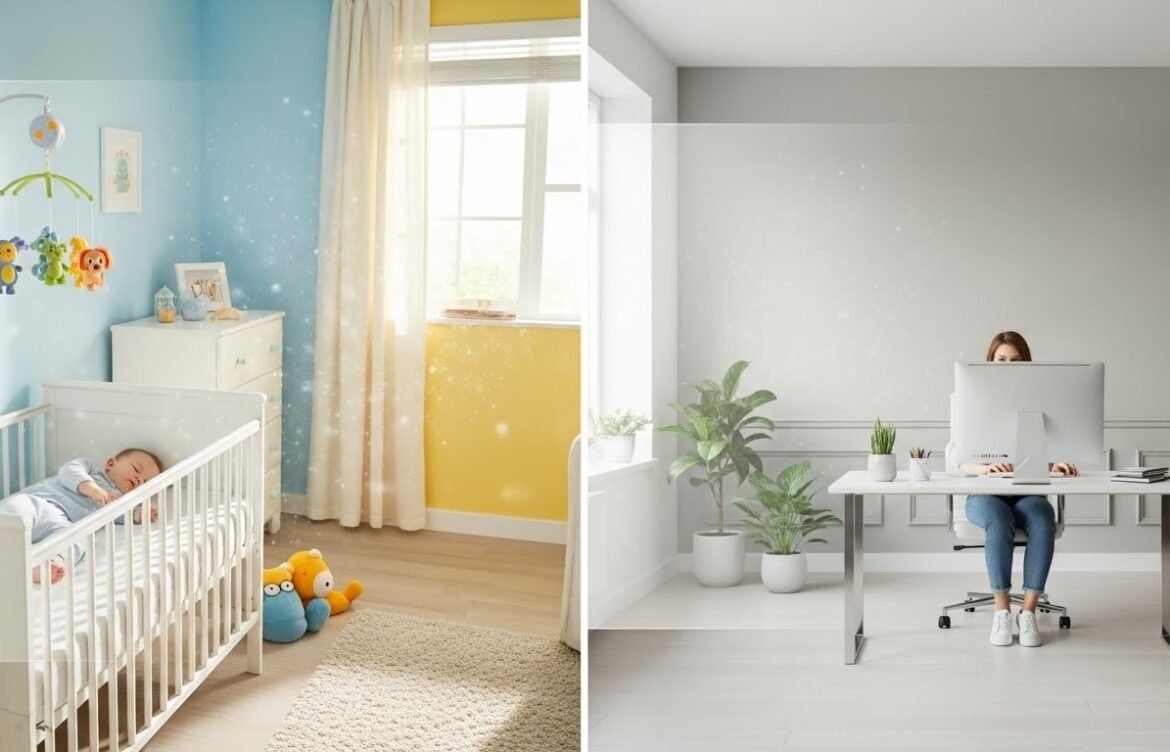
Is Your Paint Safe? The Real Talk on Low-VOC for Nurseries and Offices
You know that feeling when you walk into a freshly painted room?
For a split second, it feels crisp and clean. A fresh start. But then, about ten minutes later, you start to feel that pinch right behind your eyes. Maybe a little lightheadedness. It’s that distinctive “new paint smell.”
We’ve kind of been conditioned to think that smell means “clean.” But honestly? It’s usually just chemicals off-gassing into the air you’re breathing.
I’ve been thinking about this a lot lately. We spend so much time obsessing over organic vegetables and filtered water, but then we coat the four walls surrounding us in stuff we can barely pronounce. And it hits home hardest when you’re prepping two specific rooms: the nursery (where a tiny human will be sleeping) and the home office (where you’re locked in for 8+ hours a day).
If you’re in the middle of a nesting phase or setting up your workspace, and you’re wondering if there’s a better way to do this without the fumes, you’re in the right place. Let’s talk about safer, cleaner painting.
The Invisible Problem Floating in Your Room
So, what exactly is happening when paint dries?
It’s all about VOCs—Volatile Organic Compounds. I know, it sounds like something from a high school chemistry textbook you forgot, but stick with me.
Paint is basically a liquid soup of solvents, binders, and pigments. To keep it liquid in the can, manufacturers use solvents. Once you roll that paint onto the wall, the solvents evaporate so the paint can harden. That evaporation? That’s the VOCs entering your air.
Here’s the kicker: this off-gassing doesn’t just happen while the paint is wet. It can continue at lower levels for months after the wall feels dry.
When we’re working with clients at precisionpaintexperts, this is usually the biggest concern for parents. Babies breathe faster than adults, and their systems are still developing. The last thing you want is a nursery filled with invisible fumes.
And for the remote workers out there? If you’re sitting in a small, enclosed office all day with the door shut for Zoom calls, you’re basically hot-boxing yourself with whatever is coming off your walls. Brain fog isn’t always just about needing more coffee; sometimes, it’s your environment.
The “Zero VOC” Trap (Read the Fine Print)
Here is where it gets a little tricky, and honestly, a little annoying.
You might go to the hardware store, grab a can that says “Zero VOC” in big green letters, and think you’re golden. But marketing is… well, it’s marketing.
A lot of times, the “Zero VOC” claim applies to the base paint only. The minute the guy behind the counter adds the color tint to make that perfect “Sage Green,” he might be dumping VOCs right back into the can. The universal colorants used in many stores are full of chemicals.
Also, “Low VOC” doesn’t mean “No Odor.” And “Natural” doesn’t always mean “Durable.” I’ve seen people use clay-based paints that are super safe, but the second you try to wipe a smudge off the wall, the paint comes right off with it. Not exactly ideal for a toddler’s room or a high-traffic office.
You need that sweet spot: paint that is genuinely safe for your air quality but tough enough to handle real life.
Better Solutions for Your Walls
Okay, enough about the problem. How do we actually fix this?
The industry has come a long way in the last decade. You don’t have to sacrifice durability for safety anymore. When we handle interior painting projects, especially in sensitive areas like bedrooms, we look for very specific standards.
1. Look for GreenGuard Gold
This is the gold standard (literally). If a product is GreenGuard Gold Certified, it means it’s been tested for over 10,000 chemicals and is approved for use in schools and healthcare facilities. It’s a much higher bar than just “low odor.”
2. Check the Tint
If you’re buying paint yourself, ask the staff: “Is your colorant zero-VOC too?” Brands like Benjamin Moore (with their Natura line) and Sherwin-Williams (Harmony or Promar 200 Zero) have systems where the colorant doesn’t ruin the eco-friendly rating.
3. Don’t Forget the Primer
This is a classic rookie mistake. I’ve seen homeowners buy $80 gallons of premium eco-paint, but then slap it over a cheap, oil-based primer that smells like a refinery. The primer needs to be low-VOC too.
Also, if you’re painting over dark wood—say, you’re trying to update an old bookshelf in your office—you might be tempted to use heavy-duty blockers. Instead, check out water-based bonding primers or consider cabinet refinishing options that use professional-grade, lower-toxicity lacquers designed for indoor use.
Actionable Tips for a Fume-Free Home
If you’re ready to tackle this, here is your game plan to keep things safe and smooth.
1. Time it Right If you’re pregnant, try to get the nursery painted at least two months before the due date. Even with zero-VOC paints, giving the room time to fully cure and air out is just a good safety buffer.
2. The “Box Fan” Technique Ventilation is everything. Open the windows (if the weather cooperates) and set up a box fan in the window pointing out. You want to pull the inside air out, not just blow the fumes around the room. Keep that running for 48 hours after painting.
3. Prep Without the Dust Painting isn’t just about liquids; it’s about solids, too. Sanding creates dust that can irritate your lungs just as much as fumes. If you’re patching holes, use a wet sponge to smooth the drywall compound instead of sandpaper whenever possible. If you do have to sand, wear a mask. If you have major damage, check out our guide on drywall repair to do it cleanly.
4. Test the Color First Eco-friendly paints can dry slightly differently than traditional oil-based ones. They tend to dry faster and have a flatter finish. Before you commit to the whole room, get a sample. Better yet, get a professional color consultation to make sure that “Calming Blue” doesn’t look like “Depressing Gray” once it’s on the wall.
5. Onions? Yes, Onions. Okay, this sounds like an old wives’ tale, but I swear by it. If you do have a lingering paint smell, cut a few onions in half and leave them in bowls around the room overnight. They absorb odors incredibly well. Just… don’t cook with them afterward. Throw them out.
Common Questions (FAQ)
Q: Does low-VOC paint cost more? A: Usually, yes. You might pay $10-$15 more per gallon. But when you think about the fact that you’ll be sitting in that room every day for the next 5-10 years, that extra cost breaks down to pennies. It’s worth it.
Q: Is low-VOC paint as durable as regular paint? A: It used to be pretty weak, but today? Absolutely. High-quality acrylic zero-VOC paints are scrubbable and resistant to fading. You don’t have to treat them with kid gloves.
Q: Can I sleep in the room the same night? A: With true zero-VOC paint, technically yes. But personally? I’d give it 24 hours just to be sure. Why risk a headache?
Summary
Creating a safe space for your baby or a productive space for your work shouldn’t come with a health warning. You can have those beautiful, rich colors without the toxic cloud.
It just takes a little more attention to the label and a little more prep work. But the peace of mind knowing your air is clean? That’s unbeatable.
If you’re looking at your nursery or office and dreading the process—or if you just want someone who knows exactly which products are safe and effective—reach out to us. At precisionpaintexperts, we care about your home’s health as much as its look.
Contact us today and let’s get that project started the right way. Fresh air included.