
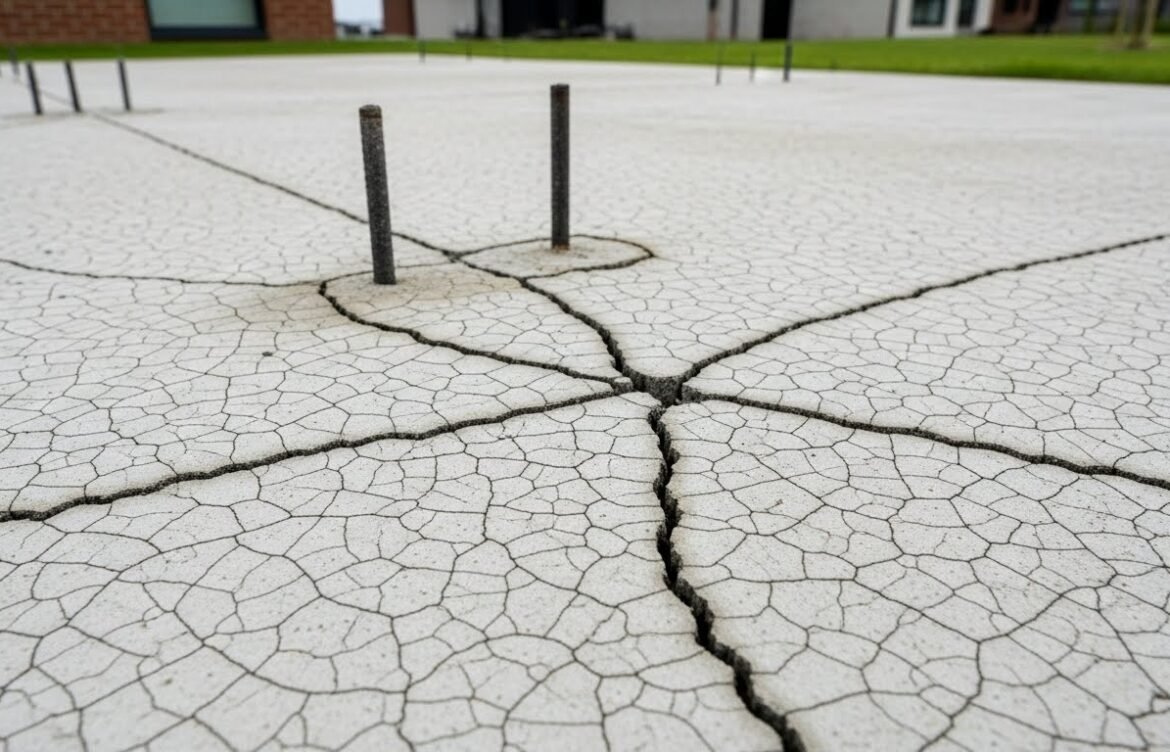
Why Your Lake City Home is Seeing Those “Spiderweb” Lines
If you’ve spent any time in Lake City, you know the ground here isn’t exactly a solid block of granite. We’re sitting on a mix of sand, clay, and limestone. Between the heavy summer downpours and the dry spells that make the yard look like a desert, the earth under our feet is constantly on the move. When the ground settles, your house moves with it.
But here’s the problem: stucco is rigid. It’s basically a thin shell of cement. When your foundation shifts even a fraction of an inch, the stucco can’t bend, so it snaps. You end up with those annoying hairline cracks or, worse, deep jagged “stair-step” fractures along the corners of your windows and doors.
Honestly, it’s frustrating. You take pride in your place, and suddenly it looks like it’s unraveling. But ignoring these cracks is an invitation for North Florida’s humidity to get behind the wall, rot your sheathing, and create a massive headache. At precisionpaintexperts, we see this all the time. Whether you’re in a historic bungalow near downtown or a newer build out by the airport, settling is just part of the local landscape.
If you’re already worried about the cracks you’re seeing, you can always get a free quote from our team to take the weight off your shoulders. But if you want to understand what’s going on and how to handle it, let’s walk through the process of reclaiming your exterior.
1. Identifying the “Settling” Signature
Not all cracks are created equal. In Lake City, we look for specific patterns. Hairline cracks are usually just from the stucco drying out or minor thermal expansion. However, diagonal cracks that start at the corners of windows or “stair-step” cracks in the masonry are the classic signatures of ground settling.
It’s important to know if your house is still moving or if it has finally found its “happy place.” If you patch a crack while the ground is still shifting, that patch is going to pop right back out in six months.
- The Scenario: You notice a crack above the garage door every time we have a particularly wet month. That’s a sign the clay in our soil is expanding and pushing on your foundation.
- Quick Tip: Take a pencil and draw a tiny line at the end of the crack. Check it in a month. If the crack has moved past the line, your house is still settling, and you might need a foundation specialist before you worry about the paint.
2. The “V-Groove” Preparation
You can’t just smear some caulk over a crack and call it a day. It won’t stick, and it’ll look like a giant scar on your house. To do it right, we actually have to make the crack a little bigger before we make it better. We use a specialized tool to “V-groove” the crack, creating more surface area for the repair material to bond to.
Once the crack is opened up, we blow out all the dust and loose debris. If you leave the dust in there, the patch is just floating on a layer of dirt, and Lake City’s humidity will eventually push it out.
- The Scenario: A homeowner tries to DIY a repair by rubbing some hardware store putty into a crack. A year later, the putty falls out in a single chunk because it never actually bonded to the stucco.
- Insight: Proper prep is about 70% of the job. It’s tedious, but it’s the only way to ensure the exterior paint lifespan reaches its full potential.
3. Choosing the Right “Bridge”
Since we know the ground in Lake City likes to move, we don’t want to use a rigid patch. We want something with “memory.” We use high-grade elastomeric sealants. Unlike regular caulk, elastomeric products can stretch and shrink.
Think of it like a rubber band. If the house shifts another millimeter, the sealant stretches instead of snapping. This “bridges” the gap and keeps the water out.
- The Scenario: We’re repairing a home near the Alligator Lake area where moisture is always high. We use a textured elastomeric patch that mimics the gritty feel of the original stucco so the repair is invisible to the eye.
- Quick Tip: Look for products labeled “High Build” or “Elastomeric.” They cost a bit more, but they save you from doing the job twice.
4. Matching the Lake City Texture
Stucco isn’t smooth. It has “soul”—whether it’s a heavy lace, a dash, or a sand finish. One of the biggest mistakes people make is using a smooth patch on a textured wall. It sticks out like a sore thumb.
We use various techniques, sometimes even using a sea sponge or a specialized hopper gun, to match the existing texture of your home. The goal is for you to forget where the crack even was once the residential painting is finished.
- The Scenario: You have a classic 1950s stucco home with a very specific “swirl” pattern. A flat patch would ruin the aesthetic. We carefully recreate that swirl in the wet patch material so it blends seamlessly.
- Insight: Matching texture is more of an art than a science. It takes a steady hand and a lot of “I’ve seen this before” experience.
5. Sealing with a Professional Topcoat
Once the patch is dry and the texture is matched, you can’t just spot-paint it. The sun in Florida is brutal, and “new” paint will almost never match “old” paint perfectly. To truly protect the repair, you need to prime the patched areas and then apply a full coat of high-quality exterior paint.
This provides a uniform UV shield across the entire wall. In Lake City, we highly recommend 100% acrylic latex paints. They are breathable, which is crucial because you want moisture vapor to be able to escape your walls without causing the paint to bubble.
- The Scenario: After the stucco is repaired, we apply a fresh coat of Florida interior paint colors (well, the exterior equivalent!) to give the house that “just built” glow.
- Quick Tip: If you’re unsure about colors, we offer a color consultation to make sure your home fits the neighborhood vibe while standing out for the right reasons.
Comparison of Stucco Repair Methods
| Repair Type | Best For | Longevity | DIY Friendly? |
| Rigid Patch | Very minor, non-moving cracks | Low (will crack again) | Yes |
| Textured Caulk | Hairline cracks | Moderate | Yes |
| Elastomeric System | Settling cracks / Moving joints | High (stretches with house) | No (Professional recommended) |
| Full Re-stucco | Extensive structural damage | Permanent | No |
Key Takeaways for Lake City Homeowners
- Don’t Wait: A tiny crack is a funnel for rainwater. Once moisture hits your plywood sheathing, you’re looking at rot and mold.
- Watch the Patterns: Diagonal or stair-step cracks are warnings that your house is moving.
- Flexibility is Key: Always use elastomeric materials in Florida to account for ground movement and heat expansion.
- Texture Matters: The patch is only half the job; matching the texture is what makes it a “repair” instead of a “blemish.”
- Prime and Paint: Always seal your repairs with a high-quality topcoat to protect the bond from UV rays.
Ready to Give Your Walls a Fresh Start?
Look, I know that seeing cracks in your home can feel like the beginning of a disaster. But in Lake City, it’s really just a sign that your house is living and breathing in a tricky environment. You don’t have to let those cracks define your home’s curb appeal or compromise its safety.
Whether you’re dealing with a few hairline issues or some serious settling “scars,” we’ve seen it all and fixed it all. We live and work right here, so we know exactly how Lake City soil behaves. Let’s get your home back to being the best-looking one on the block—solid, sealed, and beautiful.
Tired of staring at those cracks every time you pull into the driveway? We’d love to help you get it sorted. Contact precisionpaintexperts today or get a free quote online. We’ll take a look, give you an honest assessment, and get to work.