
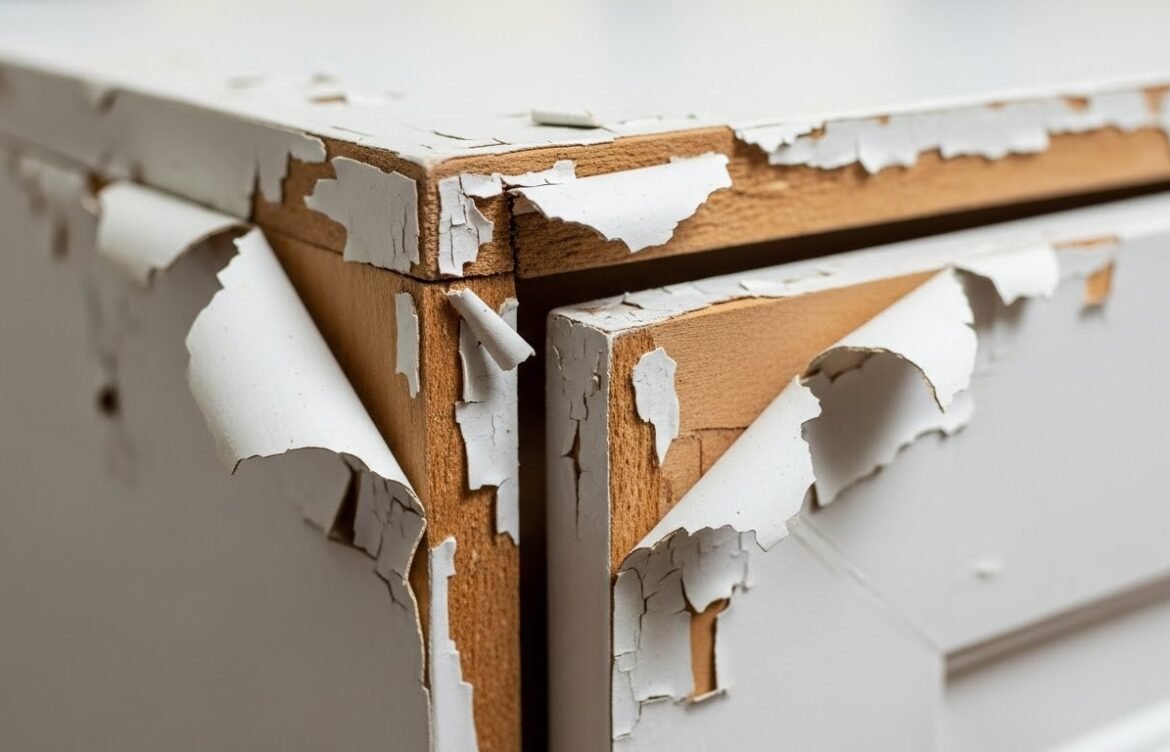
Dealing With the “Flake” Why Your Cabinets Are Shedding
You know that feeling when you’re just trying to enjoy your morning coffee, the sun hits the kitchen island just right, and you suddenly spot it. A jagged little edge where the paint has decided it’s done sticking to your cabinet door. It’s frustrating, right? You try to ignore it, but once you see that first flake, it’s all you can look at.
Kitchen cabinets take a beating. Between the steam from the pasta pot, the grease from Sunday morning bacon, and the constant “thwack” of doors closing, it’s a high-stress environment for any finish. When paint starts peeling, it’s usually a sign that the original bond has failed, often because of moisture or a lack of proper primer.
While we’d love to help you with a permanent, factory-smooth cabinet painting and refinishing job, we know that sometimes you just need a “right now” fix to get through the holidays or a big dinner party. If you’re in that boat, don’t worry—I’ve got you. Let’s walk through how to patch things up so they look decent until you can do it for real.
1. The “Scrape and Feather” Method
The biggest mistake I see people make is just dabbing more paint right over the peeling edge. Honestly, that just makes it look like a lumpy scab. The trick to a temporary fix is making the “hole” where the paint fell off disappear into the rest of the door.
You’ll want to take a small putty knife and very gently scrape away anything that is already loose. If it wants to come off, let it. Then, grab some fine-grit sandpaper (around 220 grit) and “feather” the edges. This means sanding the transition between the bare wood and the remaining paint until you can run your finger over it and not feel a bump.
- The Scenario: You have a small chip right near the handle of your most-used drawer. It’s small, but deep. By sanding the edges down, the shadow that makes the chip visible disappears.
- Pro Tip: Don’t sand too aggressively. Cabinet doors are often made of veneer or MDF, and if you sand through the top layer, you’ve just traded one problem for a much bigger one.
2. The Quick-Dry Wood Filler Bridge
If your paint was thick and left a noticeable “crater,” sanding alone won’t hide it. You need to bridge that gap. A lightweight, shrink-free wood filler is your best friend here.
Apply a tiny amount with your finger or a flexible putty knife, keeping it as flush as possible with the surrounding paint. Once it dries—which usually takes about 15 minutes for small spots—sand it smooth. This creates a level surface so the light doesn’t catch the indentation of the chip.
- The Scenario: A large flake fell off the bottom of a sink cabinet where water frequently splashes. The filler creates a new surface that mimics the original plane of the door.
- Quick Tip: Look for a filler that says “stainable” or “paintable” on the tube to ensure the touch-up paint actually sticks to it.
3. Using a High-Adhesion Primer
Even for a temporary fix, you can’t skip the “glue.” Peeling often happens because the surface was too slick or oily for the paint to grab onto. If you just put a topcoat on bare wood or old laminate, it’ll peel again by next Tuesday.
Dab a little high-adhesion primer (like Zinsser B-I-N or Stix) onto the sanded area. These primers are designed to stick to tough surfaces. This ensures your “band-aid” stays on long enough to actually be useful.
- The Scenario: You’re touching up a door that has a factory-slick finish. The primer acts as the double-sided tape that holds your repair in place.
- Insight: At precisionpaintexperts, we spend about 70% of our time on prep and priming because that’s where the longevity happens. If you skip this, even a temporary fix won’t last.
4. The “Artistic” Color Match
This is the part that scares most homeowners. How do you match a color that’s been on your walls for five years? If you don’t have the original can of paint in the garage (and let’s be real, half the time it’s dried into a brick anyway), you can take a small flake of the peeled paint to a local paint store. They can usually do a computer match.
When you apply the paint, don’t use a big brush. Use a small artist’s brush or even a makeup sponge. Instead of brushing it on, “stipple” or dab it. This mimics the texture of the surrounding paint better than long brush strokes would.
- The Scenario: You’re trying to hide a chip on a white cabinet. Even a slightly “off” white will stand out, but dabbing the paint helps blend the edges so the eye doesn’t catch the mismatch.
- Pro Tip: If the cabinets are particularly greasy, wipe the area with a bit of denatured alcohol before painting. Paint hates grease.
5. Clear Coat Sealing
If the peeling is happening in a high-moisture area—like right under the sink or near the dishwasher—your touch-up needs a shield. Once your paint is dry, a very thin wipe of water-based poly or even a clear spray sealer can help prevent water from getting back under the edges of your repair.
It’s not a permanent solution, but it’ll buy you months of time. Just make sure the finish (satin, gloss, matte) matches what you already have.
- The Scenario: The edge of the cabinet door near the stove is starting to “alligator” from the heat. A clear sealer helps keep those tiny cracks from turning into large flakes.
- Quick Tip: If you’re unsure about the sheen, err on the side of “flatter.” A shiny patch on a matte door is a dead giveaway.
Quick Comparison: Temporary Fix vs. Professional Refinishing
| Feature | DIY Temporary Patch | Professional Refinishing |
| Time Investment | 30 Minutes | 3-5 Days |
| Tools Needed | Sandpaper, Filler, Brush | Sprayers, Industrial Sanders, Booths |
| Aesthetic Result | “Good from 5 feet away” | Factory-smooth, brand new look |
| Durability | Weeks to Months | 10+ Years |
| Best Use Case | Before a party or holiday | Long-term home value |
Key Takeaways for Homeowners
- Don’t pull the loose paint: You’ll end up stripping the whole door. Only remove what’s already flaking.
- Prep is the priority: Sanding and cleaning the area is more important than the actual paint.
- Primer is your glue: Without it, your fix is just sitting on the surface, waiting to fall off.
- Manage your expectations: These fixes are meant to be camouflage, not a cure. If the cabinets are peeling in multiple spots, the original finish is likely failing everywhere.
- Plan for the future: While these patches work, eventually you’ll want to look into painting oak cabinets or whatever wood you have to give the kitchen a cohesive, lasting look.
When to Stop Patching and Start Painting
Look, I’ve been there—trying to hide that one annoying spot on the pantry door before the in-laws arrive. It works for a while. But here’s the honest truth: once cabinets start peeling, it’s usually a “systemic” issue. It means the bond is breaking down across the board.
You can patch a chip here and there, but if you find yourself doing this every Saturday morning, it’s time to think about a real refresh. When you’re ready to move past the band-aids and want a kitchen that looks like it belongs in a magazine, we can help. Whether you’re interested in Florida interior paint colors to brighten the space or a classic white finish, our team knows how to do it so it never peels again.
Tired of chasing flakes around your kitchen floor? We’d love to help you get a permanent solution on the books. Contact us at precisionpaintexperts today for a chat about your cabinets. Or, if you’re just starting to plan, you can get a free quote online.