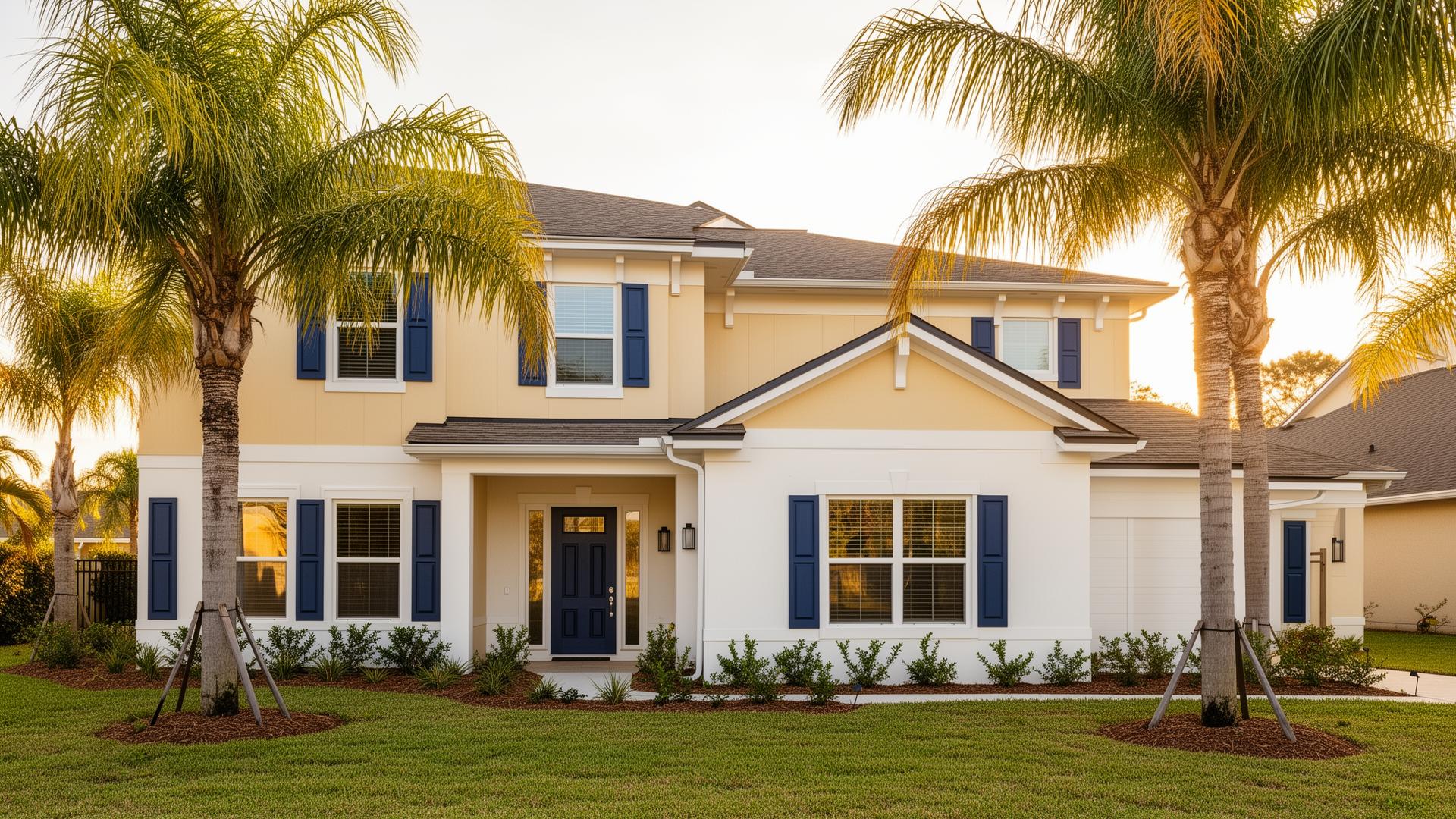
How Florida Weather Affects a House Painting Project
Dew point, humidity, and afternoon storms decide when a crew can actually spray.
The short version
Dew point, humidity, and afternoon storms decide when a crew can actually spray. Across Alachua, Marion, Levy, Columbia, and Gilchrist counties we see how weather windows control an exterior painting schedule on houses of every age and every siding type, and the pattern is remarkably consistent: the problem is visible long before most homeowners treat it as urgent, and the cost of the fix roughly doubles every season it is ignored. This guide walks through what is actually happening at the surface, how our crews diagnose it in the field, what a correct repair looks like, and what you can do yourself to keep it from coming back.
Precision Paint Experts has worked on North Central Florida buildings for more than fifteen years, which means nearly every job we quote has already lived through the same combination of high UV load, summer humidity above 80%, daily afternoon storms, and a heavy spring pollen season. Those four forces are why a coating system that performs for a decade in a dry climate can start failing here in three or four years. Understanding that context is the difference between a repair that holds and one that has to be redone.
What causes how weather windows control an exterior painting schedule
Coatings cure by evaporation and coalescence, both of which stall in high humidity or near dew point. In practice that means the visible symptom is downstream of a condition you cannot see from the driveway, and treating the symptom alone guarantees a repeat. When we inspect for how weather windows control an exterior painting schedule, we start by mapping where it appears — which elevation, which height off grade, how close to a penetration or a joint — because location tells us more about cause than the damage itself does.
Moisture is the common denominator in most North Central Florida failures. A wall or surface that is wetted repeatedly and never allowed to fully dry will break down the bond between coating and substrate regardless of how good the paint is. Add thermal cycling — a surface that swings from 75°F at dawn to 140°F on a west wall by mid-afternoon — and every joint, seam, and fastener in the assembly is moving several times a day.
The second contributor is prep that was rushed on the previous job. Chalk, mildew film, dust, and old failing coating all reduce adhesion. A premium topcoat applied over a compromised surface will fail at roughly the same rate as a builder-grade coating, which is why we treat surface preparation as the majority of the labor on almost every project rather than as a step to compress when the schedule gets tight.
How to fix it correctly
Work morning-to-early-afternoon windows, check surface moisture, and stop early enough for the film to set before rain. That sequence matters. Skipping the diagnostic step and moving straight to coating is the single most common reason a homeowner pays twice, and it is also the reason we photograph and document conditions before we write an estimate rather than quoting from a phone call.
Materials matter almost as much as sequence. We specify Sherwin-Williams and Benjamin Moore systems chosen for the specific substrate and exposure — 100% acrylic for most siding and stucco, elastomeric where crack bridging is required, waterborne urethane enamels on cabinetry, trim, and doors, and moisture-tolerant primers wherever the substrate has any history of wetting. The exact product line and the number of coats appear on your written estimate so there is nothing to argue about later.
Application is the last variable. Two coats at manufacturer-specified mil thickness, applied inside the recoat window, above dew point, and away from direct hot sun, will outlast three sloppy coats every time. Our crews carry moisture meters and check surface temperature rather than guessing, and we stop early enough in the afternoon for the film to set before the daily storm rolls through.
Preventing it from coming back
Book exterior projects for the drier months when you can and build weather days into the schedule. Maintenance is unglamorous and it is also the cheapest money you will ever spend on your building. A yearly wash and a fall caulk inspection cost a fraction of one elevation of repair work, and they extend the life of the coating system by years.
We give every client a short written maintenance note with the final invoice: what to wash and when, which product to use for touch-ups, where the labelled touch-up paint is stored, and what to watch for on the elevations that take the most sun. Clients who follow it typically get three to five extra years out of the same coating system.
If you would rather not manage it yourself, we offer scheduled maintenance visits for both homes and commercial properties. It is the same crew that did the original work, they already know the building, and small issues get corrected while they are still small.
When to call a professional
Some of this is genuinely a weekend project. Washing pollen off a one-story wall, touching up a chip, or re-staining a small section of fence are all reasonable DIY tasks with the right products. The line we draw is structural: once you find soft wood, active moisture inside the assembly, suspected asbestos, or damage above the first story, the risk and the specialty equipment both argue for a licensed contractor.
Precision Paint Experts is licensed and fully insured, and we can provide a certificate of insurance before we mobilize. Estimates are free, written, and itemized by scope so you can see materials, prep hours, and coating quantities line by line. If a repair is smaller than you feared, we tell you that — we would rather do the honest small job now and the full project when you are ready.
Ready for help with this? See our exterior painting service or browse all painting services.
Frequently asked questions
Talk to a real painter, not a call center
Reading about it is one thing — having a licensed painter look at it is another. Send us photos and a few details and we will tell you honestly whether this is a small repair or a bigger project, then follow up with a free written, itemized estimate.
Prefer to talk it through?
Call or email and a crew lead will answer scheduling, prep, and product questions directly. You can also use the estimate form at the top of this page or the chat bubble in the corner.
Contact information
Newberry, FL 32669 · Serving all of North Central Florida
- Mon-Fri — 9:00 AM – 6:30 PM
- Saturday — Closed
- Sunday — Closed